
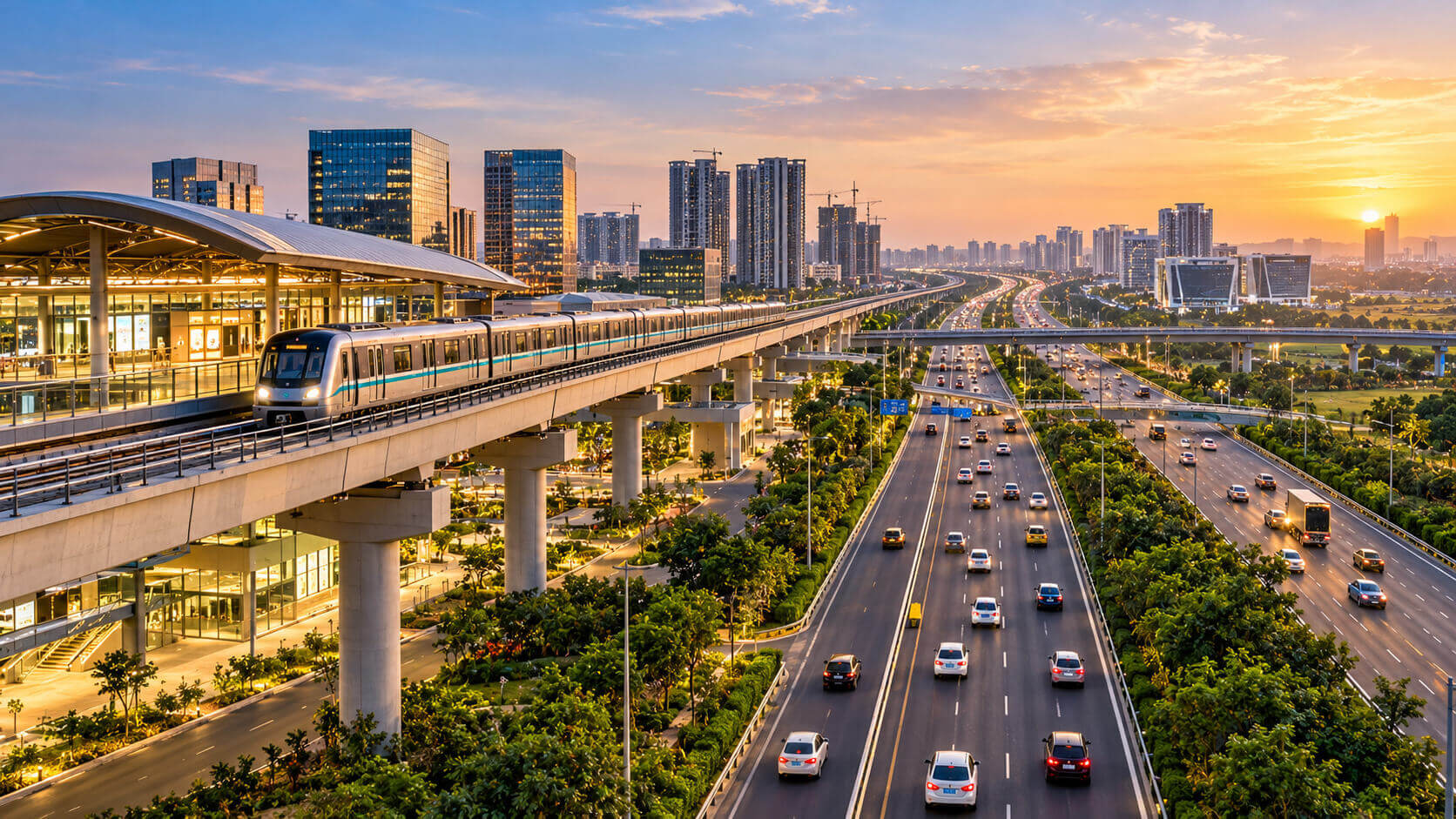
Infrastructure is more than a transportation upgrade; it can influence where businesses operate, where people spend their time, and where investors look for commercial property. In Greater Noida, expressways, the existing Aqua Line metro corridor, and planned metro extensions are shaping the region’s long-term development potential.
For high-net-worth individuals, NRIs, commercial property investors, and hospitality operators, understanding this relationship is essential. Better connectivity can improve access to workplaces, retail destinations, and business districts. However, the investment opportunity depends on more than infrastructure announcements. Location, occupancy, rental demand, project quality, and acquisition costs remain equally important.
As Greater Noida continues to develop, the key question is not simply which infrastructure projects are coming up, but how they could influence the commercial property market over time.
Why Infrastructure Matters for Commercial Real Estate Demand
Commercial properties depend on accessibility, customer movement, workforce availability, and proximity to economic activity. Expressways improve regional road connectivity, while metro networks offer an alternative to private vehicles for daily commuting.
These advantages can influence businesses when they evaluate locations for offices, retail outlets, hospitality establishments, and service-oriented operations.
The relationship works through several channels:
- Business accessibility: Faster or more convenient journeys can expand the potential workforce and customer catchment.
- Retail visibility and footfall: Well-connected locations may attract more visitors, although actual footfall depends on the surrounding population, tenant mix, and retail offering.
- Workplace convenience: Reliable public transport can make a commercial district more practical for employees and visitors.
- Investment interest: Infrastructure improvements may increase investor attention, but they do not guarantee capital appreciation or rental income.
For investors, the distinction is important: connectivity creates an advantage, while commercial viability determines whether a property can convert that advantage into sustainable returns.
Expressways Strengthening Greater Noida’s Regional Connectivity
Greater Noida benefits from a road network that connects it with other parts of the National Capital Region (NCR) and destinations beyond it. The Noida–Greater Noida Expressway and Yamuna Expressway are important components of this network, while the Eastern Peripheral Expressway supports regional movement around the wider NCR.
Noida-Greater Noida Expressway
The Noida–Greater Noida Expressway connects key urban and employment areas across Noida and Greater Noida. Its accessibility supports business travel, employee commuting, and movement between residential and commercial districts.
For commercial property investors, locations with convenient access to employment hubs and established residential catchments may be worth examining. The real opportunity depends on the specific sector, competing properties, road access, and the strength of local demand.
Yamuna Expressway
The Yamuna Expressway connects Greater Noida with Agra and passes through the broader Yamuna Expressway development region. Its importance extends beyond everyday commuting to regional connectivity and the planned development of industrial, institutional, and urban areas.
The proposed investment case around this corridor requires a location-specific assessment. Investors should distinguish between established commercial markets and areas where demand depends on future development, infrastructure delivery, or planned economic activity.
Eastern Peripheral Expressway
The Eastern Peripheral Expressway provides an additional regional road connection around Delhi and links with major highways serving the NCR. For businesses involved in logistics, distribution, and regional operations, such connectivity can be relevant when evaluating transport routes and operating locations.
However, a site’s proximity to an expressway does not automatically make it suitable for every commercial use. Direct access, last-mile roads, zoning, and the availability of supporting infrastructure all matter.
Metro Expansion and Its Potential Impact on Commercial Property
Road infrastructure supports regional movement, while metro connectivity can strengthen access for daily commuters. In Greater Noida and Noida, the operational Aqua Line already provides a public transport connection between the two cities.
The next phase of network development is particularly relevant to investors assessing long-term commercial locations.
Aqua Line extension towards Greater Noida West
According to the Noida Metro Rail Corporation (NMRC), the proposed 17.435-kilometre extension from Sector 51 to Knowledge Park V includes 11 elevated stations. The planned corridor is intended to improve connectivity for commuters in Noida, Greater Noida West, and Greater Noida.
If delivered as planned, improved access could make selected commercial locations more convenient for employees, residents, and customers. Nevertheless, investors should verify construction progress, commissioning timelines, and the distance between a property and its nearest usable station before factoring future metro benefits into a purchase decision.
Sector 142-Botanical Garden Extension
The Government of India announced Cabinet approval for the 11.56-kilometre Aqua Line extension from Sector 142 to Botanical Garden in February 2026. The approved corridor includes eight elevated stations and is intended to improve connections with the Delhi Metro network at Botanical Garden.
This project is relevant to commercial property analysis because interchange connectivity can improve access across a wider urban network. Its eventual impact will depend on implementation, travel convenience, station access, and the commercial activity surrounding individual locations.
Depot-Boraki Extension
NMRC also lists a 2.6-kilometre extension from Depot Station to Boraki, comprising two stations. The project is intended to support multimodal connectivity at the proposed Boraki Multi-Modal Transport Hub.
For commercial investors, this highlights the importance of evaluating how metro access may integrate with other transport facilities. Since listed projects can occupy different stages of development, proposed infrastructure should not be treated as an operational benefit until it becomes available for public use.
Which Commercial Property Segments Could Benefit?
Infrastructure does not affect every property category in the same way. The likely impact depends on the business model, the surrounding catchment, and the property's suitability for its intended use.
| Property segment | Potential connectivity advantage | What investors should assess |
|---|---|---|
| Retail shops | Easier access for local shoppers and visitors | Visibility, footfall, frontage, tenant demand, and competition |
| Office spaces | More convenient employee and business travel | Employment hubs, transport access, building specifications, and leasing demand |
| Hospitality properties | Better access for guests and business travellers | Visitor demand, competing hotels, occupancy prospects, and operating costs |
| Commercial units in mixed-use developments | Access to nearby residents, workers, and services | Occupancy, tenant mix, maintenance, and the quality of the surrounding catchment |
Retail shops: Access must translate into customer activity
Retail investors should look beyond a property's distance from a metro station or expressway. Ground-floor visibility, pedestrian movement, parking, surrounding residential density, and the presence of complementary businesses can have a more direct influence on sales potential.
A well-positioned retail unit can serve everyday requirements, food and beverage businesses, and local services. Yet even a connected location may underperform if the development lacks active tenants or sufficient consumer demand.
Office spaces: Connectivity supports workplace planning
Businesses consider commuting convenience alongside rental costs, building facilities, employee access, and proximity to clients. Improved transport links may strengthen a location's appeal, but investors should evaluate actual leasing activity rather than relying solely on future infrastructure plans.
Hospitality: Accessibility is one part of the operating model
Hotels and other hospitality assets may benefit from convenient access to business districts, transport hubs, event venues, and visitor destinations. However, connectivity alone cannot establish the commercial case. Occupancy, average room rates, seasonality, operating expenses, and competing supply require separate analysis.
What Commercial Property Investors Should Evaluate Before Buying
For HNIs, NRIs, and other investors, infrastructure-led opportunities require a disciplined assessment of both the property and the surrounding market.
Use the following checklist before committing capital:
- Verify the infrastructure status. Distinguish operational roads and metro lines from approved, under-construction, and proposed projects.
- Assess actual accessibility. Check road entry points, station access, last-mile transport, and realistic travel routes.
- Study local demand. Review nearby employment centres, residential catchments, existing retailers, and competing commercial developments.
- Examine rental fundamentals. Request evidence of achieved rents, vacancy levels, tenant profiles, and lease terms where available.
- Calculate the total investment cost. Include applicable taxes, registration charges, maintenance, fit-out expenses, financing costs, and vacancy periods.
- Conduct legal due diligence. Verify title, land use, sanctioned plans, applicable RERA registration, approvals, and the developer's contractual obligations.
- Model realistic returns. Consider conservative rental, occupancy, and resale assumptions rather than relying on promised appreciation.
NRIs should also confirm applicable Indian property ownership, payment, tax, and repatriation requirements with qualified legal and tax advisers.
Evaluating Greater Noida Through a Long-Term Investment Lens
Greater Noida offers investors a combination of established road connectivity, an operational metro corridor, and planned transport expansion. These factors provide a useful starting point for evaluating the region's commercial property potential, but they do not eliminate investment risk.
The more useful approach is to compare individual developments on location, access, construction and possession status, tenant demand, and total acquisition cost. A completed property in a functioning commercial catchment may present a different risk profile from a unit whose business case depends on infrastructure that has yet to become operational.
At Levante Group, investors exploring commercial property in Greater Noida can assess how different property formats align with their objectives. Developments such as Levante Metro Walk and Levante City Vista can be considered as part of that evaluation, subject to verification of their specific offerings, approvals, location advantages, and current availability.
For investors exploring retail shops in Greater Noida, the priority should be to understand the likely customer base and leasing fundamentals. Those considering commercial spaces in Greater Noida should similarly evaluate tenant suitability, operating costs, and the property's ability to serve an established or emerging business catchment.
The goal is to identify a property whose fundamentals make sense today, with infrastructure improvements serving as a potential additional advantage rather than the sole investment rationale.
Conclusion
Expressways and metro expansion can influence commercial real estate demand by improving regional accessibility, supporting commuter movement, and making selected business locations more practical. In Greater Noida, the existing expressway network and operational Aqua Line provide a foundation, while proposed and approved metro extensions offer additional connectivity potential.
For investors, the strongest decisions come from combining infrastructure research with property-level due diligence. Location, tenant demand, legal compliance, pricing, and realistic rental expectations should guide the final assessment.
Explore Levante Group's commercial developments in Greater Noida to understand the available property options and evaluate whether they align with your investment strategy.
Frequently Asked Questions
1. How do expressways affect commercial real estate demand?
Expressways can improve regional connectivity, reduce route constraints, and support movement between business districts. Their effect on commercial property depends on local economic activity, accessibility, and the suitability of individual sites.
2. Does metro connectivity increase commercial property value?
Metro connectivity may improve a property's accessibility and attractiveness to some occupiers. However, price appreciation is not guaranteed and depends on factors such as supply, demand, location, property quality, and the wider market.
3. Which commercial properties may benefit from metro expansion in Greater Noida?
Retail units, offices, and selected hospitality properties may benefit where improved access aligns with genuine customer, employee, or visitor demand. Investors should assess each property's catchment and business model separately.
4. Is it advisable to buy commercial property near a proposed metro station?
It may be worth evaluating, but investors should verify the project's official status, route alignment, expected delivery schedule, and actual walking or driving access. They should also determine whether the property's current price already reflects anticipated infrastructure benefits.
5. What should investors check before buying commercial property in Greater Noida?
Investors should review legal approvals, title, applicable RERA details, location, rental evidence, vacancy risk, maintenance costs, competing supply, and the status of nearby infrastructure projects before making a decision.