
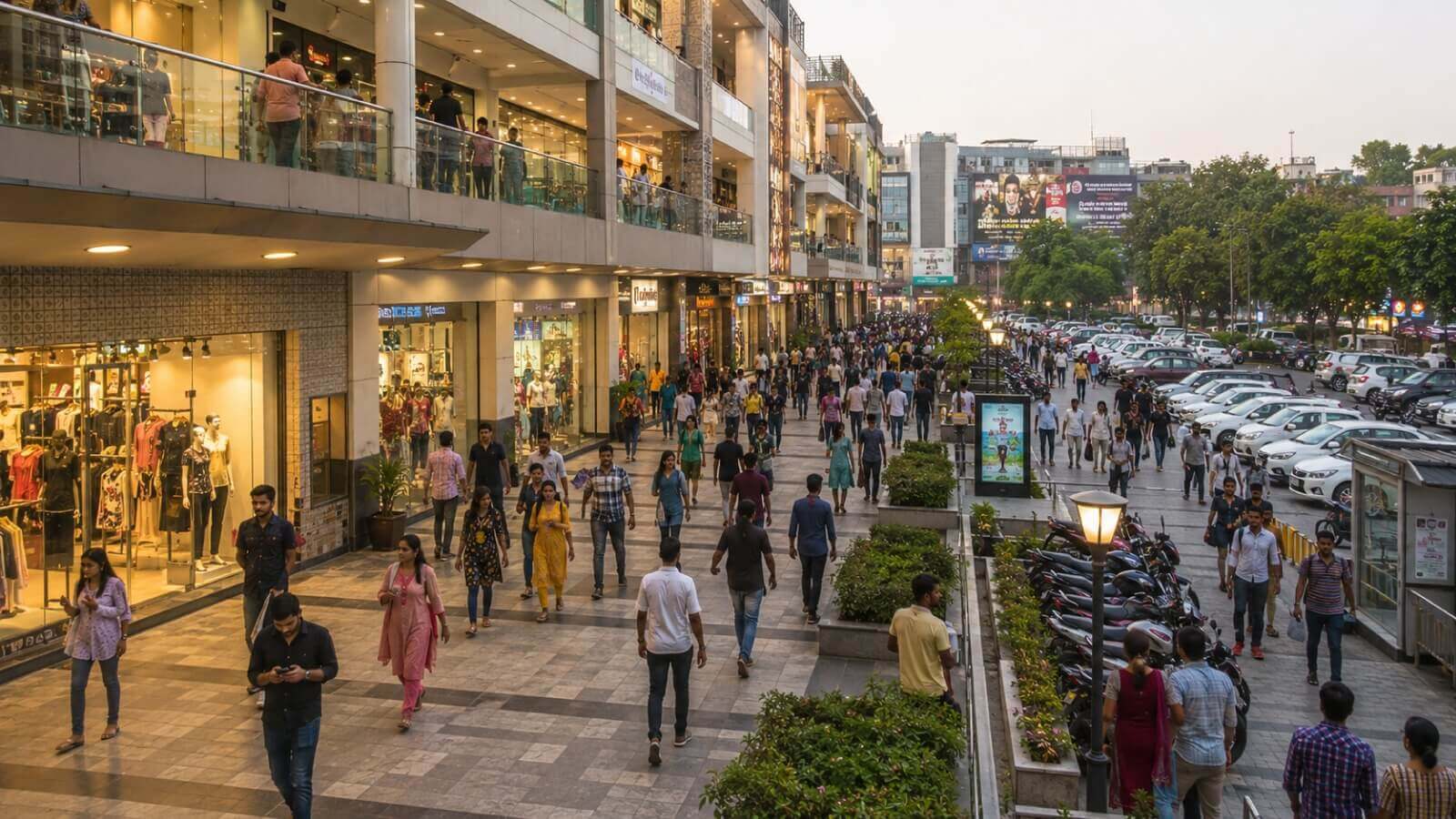
Retail success depends on more than just the products you sell. Even a well-designed store with competitive pricing can struggle if it is located in the wrong place. On the other hand, a retail shop in a high-demand, well-connected location has a greater opportunity to attract customers, generate sales, and build long-term value.
For real estate investors, entrepreneurs, and commercial property buyers, understanding how location determines the success of a retail shop is essential before making an investment. The right location influences customer footfall, business visibility, rental potential, and future capital appreciation.
As commercial hubs continue to evolve in cities like Greater Noida, mixed-use developments and transit-oriented projects are becoming increasingly attractive for retailers seeking sustainable business growth.
Why Location is the Most Important Factor for Retail Success
The famous real estate principle "Location, Location, Location" continues to hold for commercial properties.
Unlike residential properties, retail businesses rely heavily on customer accessibility and visibility. Even the strongest marketing campaigns cannot fully compensate for a poor location with limited foot traffic.
A strategic location helps businesses:
- Increase daily customer visits
- Improve brand visibility
- Enhance customer convenience
- Generate repeat business
- Support long-term profitability
- Improve rental demand for investors
Whether you are opening your first retail outlet or investing in retail shop spaces, location should always be one of the first evaluation criteria.
Key Factors That Determine Retail Shop Success
1. Customer Footfall
Footfall directly affects business revenue.
Retail shops located near residential communities, office complexes, educational institutions, metro stations, or entertainment hubs naturally receive higher visitor numbers.
Higher pedestrian movement creates more opportunities for:
- Impulse purchases
- Brand discovery
- Repeat customers
- Higher daily sales
Businesses selling food, fashion, electronics, pharmacy products, and convenience goods particularly benefit from consistent foot traffic.
2. Excellent Connectivity
Accessibility plays a major role in customer decision-making.
Customers prefer retail destinations that are easy to reach through:
- Metro connectivity
- Wide roads
- Public transport
- Highways
- Adequate parking
Poor accessibility may discourage potential customers regardless of product quality.
As infrastructure improves across Greater Noida, commercial developments located near major transport corridors continue attracting both businesses and investors.
3. Visibility Matters
A retail shop hidden inside an isolated corner receives significantly less exposure than one facing a busy road.
Good visibility offers several advantages:
- Easier customer recognition
- Stronger brand recall
- Better signage exposure
- Increased walk-in traffic
Corner shops and frontage-facing commercial units often command greater demand because they maximize customer attention.
4. Understanding the Target Audience
A successful retail location matches the intended customer profile.
| Retail Business | Ideal Location |
|---|---|
| Restaurants & Cafes | Residential areas, offices, malls |
| Grocery Stores | High-density residential sectors |
| Fashion Stores | Shopping destinations |
| Medical Shops | Hospitals, residential communities |
| Electronics | Commercial markets |
| Salons & Wellness | Mixed residential-commercial zones |
Before purchasing commercial space, investors should evaluate whether the surrounding population aligns with their business category.
5. Population Density
A growing residential population plays a significant role in sustaining long-term retail demand and supporting commercial growth. Retail properties located near apartment complexes, integrated townships, student housing communities, IT parks, and corporate office hubs often benefit from a larger and more consistent customer base. These locations typically experience higher business activity, stronger consumer spending, and increased footfall compared to isolated commercial developments. The presence of a diverse population also creates demand for a wide range of retail and service businesses. This advantage is one of the key reasons why mixed-use developments have become increasingly popular among commercial investors seeking stable occupancy, rental income, and long-term value appreciation.
6. Nearby Businesses Create Value
Retail properties located within established commercial clusters often perform better than standalone shops. Areas that feature complementary businesses such as restaurants, fashion outlets, electronics stores, and lifestyle shopping centers tend to attract a larger number of visitors and encourage repeat customer visits. When multiple businesses operate within the same destination, shoppers are more likely to spend additional time exploring different stores, resulting in increased spending and higher overall footfall. This synergy benefits all businesses within the cluster by creating a vibrant commercial environment that supports sustained growth. As a result, retail hubs frequently generate stronger leasing demand, better occupancy levels, and greater long-term investment potential compared to isolated commercial locations.
7. Future Infrastructure Development
Commercial investment should focus not only on current demand but also on future growth.
Important infrastructure developments include:
- Metro expansion
- Expressways
- Airport connectivity
- New residential sectors
- Business parks
- Educational institutions
Infrastructure improvements often increase commercial demand over time, making early investments potentially more valuable.
Always verify government announcements through official planning authorities before making investment decisions.
Conclusion
Understanding how location determines the success of a retail shop is essential for anyone planning to start a business or invest in commercial real estate. While factors like product quality, customer service, and marketing remain important, location often determines how easily customers discover and access a business.
A successful retail location combines high visibility, strong connectivity, growing residential demand, complementary businesses, and future infrastructure development. Investors who evaluate these factors carefully are better positioned to achieve stable rental income, business growth, and long-term capital appreciation.
If you're exploring opportunities in Greater Noida, prioritize commercial developments that align with evolving urban growth, offer excellent accessibility, and support a diverse mix of residential and commercial activity.
Frequently Asked Questions
Why is location important for a retail shop?
Location influences customer footfall, accessibility, visibility, rental demand, and long-term business growth, making it one of the most important factors in retail success.
What makes a retail location successful?
A successful retail location typically offers high foot traffic, excellent road connectivity, nearby residential or commercial developments, sufficient parking, and strong visibility.