
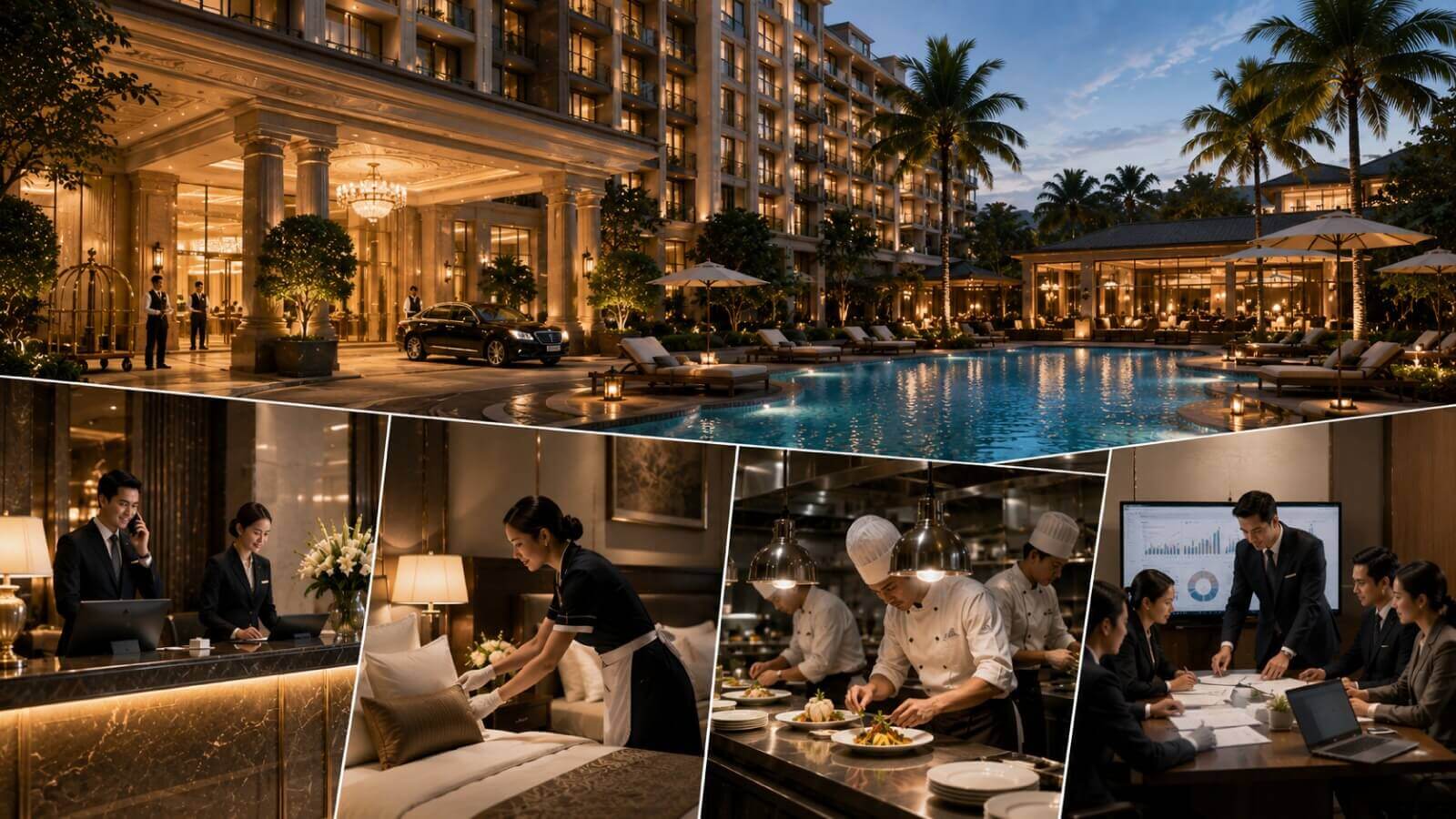
A great hotel is rarely defined by architecture alone. Location, design and amenities may attract guests, but sustained performance depends on how effectively the property is operated.
Behind that performance is often a hospitality company managing the people, processes, service standards and commercial decisions that keep the hotel functioning every day. For real estate investors, HNIs, NRIs and hospitality investors, this distinction matters: a hotel is both a physical asset and an operating business.
The Hospitality Company Behind the Hotel
A hospitality company provides the operational expertise needed to run a hotel consistently. Depending on the management structure, its responsibilities typically include:
- Day-to-day operations
- Staff recruitment and training
- Guest services
- Housekeeping and maintenance
- Food and beverage operations
- Revenue and inventory management
- Sales and distribution
- Marketing
- Quality control
- Guest feedback and service improvement
The building provides the physical framework; the hospitality company makes that framework work. This becomes especially important in premium hospitality, where consistency matters as much as design.
Turning a Property Into an Experience
Guests rarely see the systems behind a hotel. They experience the result.
A seamless check-in, well-prepared room, responsive service and well-maintained surroundings depend on coordinated processes and trained teams. Hospitality companies create those systems and monitor whether they deliver the required standard.
In this sense, luxury is not simply about what guests see. It is about how reliably the property performs.
People Remain at the Centre
Technology can streamline reservations, payments and communication, but hospitality remains fundamentally people-driven.
A hospitality company must therefore build more than adequate staffing. Recruitment, training, service protocols and accountability systems all influence how employees respond to guests and manage daily operations.
For premium hotels, this attention to people is particularly important because seemingly minor interactions can influence the perception of the entire property.
Protecting the Hotel's Standards
A hotel's quality does not stop at project completion. Its physical condition requires continuous attention.
Rooms need maintenance, equipment needs servicing, public areas require upkeep and landscaping must remain presentable. Food and beverage operations also demand constant supervision.
Effective hospitality management therefore serves as a form of asset stewardship. It protects the property's physical quality while ensuring that the guest experience remains aligned with its original positioning.
Hospitality Management Drives Commercial Performance
Unlike many real estate assets, hotel inventory is time-sensitive. An unsold room cannot be recovered once that night's opportunity has passed.
This makes pricing, demand forecasting, inventory allocation and distribution central to hotel operations. Hospitality companies use these functions to respond to market conditions while managing relationships with booking platforms, corporate clients, travel partners and direct customers.
These activities may remain invisible to guests, but they form a critical part of the hotel's commercial engine.
Why Brand Standards Matter
A hospitality brand makes a promise about the experience guests can expect. That promise only carries value when the experience remains consistent.
Operating procedures help standardise key touchpoints, from reservations and arrival to housekeeping, dining and departure. For investors, this consistency is significant because a premium property's positioning depends on more than its physical appearance.
The service must support the promise made by the brand.
What Makes a Hospitality Company Valuable?
A capable hospitality company does more than keep a hotel operational. It builds systems that allow the property to perform consistently while balancing guest expectations with commercial objectives.
Five capabilities are particularly important:
- Operational discipline: Ensuring daily activities follow defined standards.
- People management: Recruiting, training and developing service-oriented teams.
- Commercial expertise: Managing pricing, distribution, inventory and demand.
- Asset stewardship: Maintaining the property's physical quality.
- Guest understanding: Using feedback and customer insights to improve service.
These capabilities are interconnected. Strong service without commercial discipline can undermine sustainability, while aggressive revenue management without service quality can weaken the guest experience.
The strongest hospitality operations balance both sides of the business.
Conclusion
Behind every memorable hotel experience is an operating system that guests rarely see.
A hospitality company brings together people, processes, service standards, commercial strategy, maintenance and guest insights to turn a physical property into a functioning hospitality business.
For investors, the lesson is straightforward: look beyond the building. Understanding who operates a hotel, how its systems work and whether its management approach supports the property's positioning can be as important as evaluating the asset itself.
Architecture creates the first impression. Consistent hospitality determines whether that impression lasts.